%20(4541%20x%203027%20px)%20(4541%20x%201500%20px)%20(8).webp)
The Strategic Value of Event-Driven Architecture in Enterprise Integration
Event-Driven Architecture (EDA) is rapidly moving from a niche concept to a mainstream strategy for businesses pursuing digital excellence. This architectural paradigm represents a significant evolution from traditional request-response models to a more agile, real-time framework. Our blog explores the profound impact of EDA on real-time communication, its pivotal role in complex environments like SAP integration, and how it acts as a catalyst for genuine digital transformation. We will examine how to leverage this approach for scalable, resilient, and responsive enterprise integration.
Understanding Event-Driven Architecture
From Request-Response to Real-Time Events
Traditionally, systems have depended on request-response mechanisms, where one system sends a request to another and waits for a response. This synchronous model creates tight coupling between services, often leading to performance bottlenecks and reduced agility. In a business environment where instantaneous responses and seamless data flow are critical, this legacy approach is no longer sufficient.
Event-Driven Architecture provides a more effective paradigm. It supports real-time communication, allowing systems to respond to events as they occur in real-time. At its core, EDA revolves around events, significant occurrences or state changes within a system, such as a new order, a sensor reading, or a customer profile update. These events trigger actions, prompting other components or systems to respond accordingly without being directly coupled.
.png)
Key Advantages of an Event-Driven Approach
What sets EDA apart and makes it such a game-changer? Firstly, it fosters agility and responsiveness by decoupling components and systems. Unlike traditional architectures where tight coupling can lead to dependencies and bottlenecks, EDA allows systems to operate independently, reacting to events autonomously. This decoupling enhances flexibility and simplifies scalability, as components can be added or modified with ease.
Moreover, EDA embraces the principles of scalability and elasticity, making it well-suited for modern, dynamic environments. With the exponential growth of data and the increasing demand for real-time insights, traditional architectures struggle to keep pace. In contrast, EDA scales effortlessly, ensuring that systems can handle spikes in workload without sacrificing performance or reliability.
Enabling Real-Time Data Integration
A critical element of digital transformation is the shift from batch processing to real-time data streaming. EDA is the key enabler of this transition. Real-time data integration enables organizations to process and react to business events as they occur, rather than relying on scheduled batch updates. This approach minimizes latency, supports timely decision-making, and allows enterprises to respond immediately to critical events such as fraud detection or supply chain disruptions. By ensuring that information flows continuously across all connected systems, real-time integration helps maintain data consistency, improve operational efficiency, and unlock greater business agility.
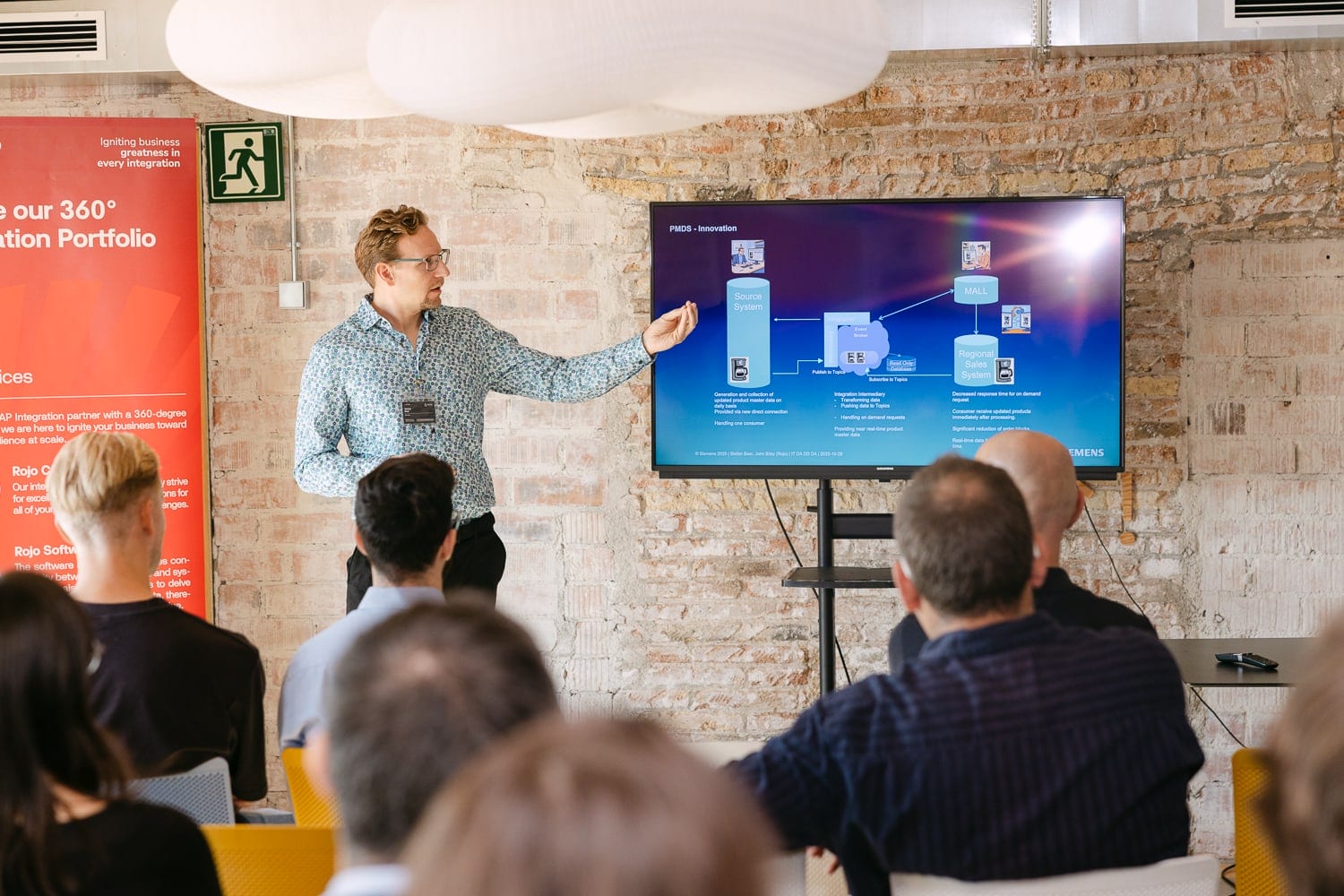
A practical example of successful real-time data streaming can be seen in Siemens' use of Confluent Kafka, which enabled faster synchronization of SAP master data. For more insights into Siemens' experience and technical implementation strategies, you can access the presentations from our recent The Future of Integration Event here.
Unlike traditional architectures where tight dependencies create bottlenecks, EDA allows systems to operate independently and react to events autonomously. This decoupling enhances flexibility and simplifies scalability, as new services can be added or existing ones modified with minimal impact on other parts of the system.
Moreover, EDA is inherently built for scalability and elasticity, making it ideal for dynamic, modern environments. As data volumes grow and the demand for real-time insights increases, event-driven systems scale effortlessly. They can handle significant spikes in workload without sacrificing performance or reliability, a key differentiator from architectures that struggle under pressure.
EDA as a Catalyst for Digital Transformation
For many organizations, the migration from legacy SAP ECC systems to S/4HANA presents a monumental opportunity. This shift is not just a technical upgrade but a chance to fundamentally reimagine business operations. A simple “lift and shift” of old integration patterns is a missed opportunity for real improvement. Organizations should instead use this change as a catalyst to modernize their whole landscape.
EDA has become a business imperative for real-time responsiveness. In fast-moving and competitive environments, businesses cannot afford to delay their response to critical events. Implementing EDA during an S/4HANA migration allows an organization to build a resilient and responsive enterprise, turning a mandatory upgrade into a strategic transformation initiative. The biggest obstacle is often not technology, but education, helping teams understand the mindset shift required for modern, event-driven integration.
The Future of Integration: EDA and AI-Driven Automation
The convergence of artificial intelligence and event-driven architecture is rapidly reshaping integration strategies for modern enterprises. EDA supplies the real-time, high-quality data streams essential for AI-driven applications, empowering systems to automate processes, recognize critical patterns, and make context-aware decisions as events unfold. By embedding AI into an event-driven framework, organizations can respond instantly to evolving business conditions, increase operational resilience, and accelerate digital transformation. For a deeper dive into how event streaming is making integrations truly AI-ready, read more about Confluent's approach on AI-ready integration with data streaming.
Rojo Integrations: Your Partner in EDA Adoption
We fully support the transformative potential of Event-Driven Architecture to drive digital innovation, knowing it will soon become non-negotiable for businesses aiming to stay competitive. Accelerating implementation is key, and leveraging pre-built integration accelerators for common processes like order-to-cash can reduce time-to-value by up to 70%. Our comprehensive consulting services help organizations harness the power of EDA to unlock new opportunities, improve operational efficiency, and deliver exceptional customer experiences.
Ready to explore how a holistic, AI-augmented approach powered by Event-Driven Architecture could transform your integration landscape?
Connect with a Rojo expert to discuss your EDA-driven integration roadmap.
.webp)
.webp)